

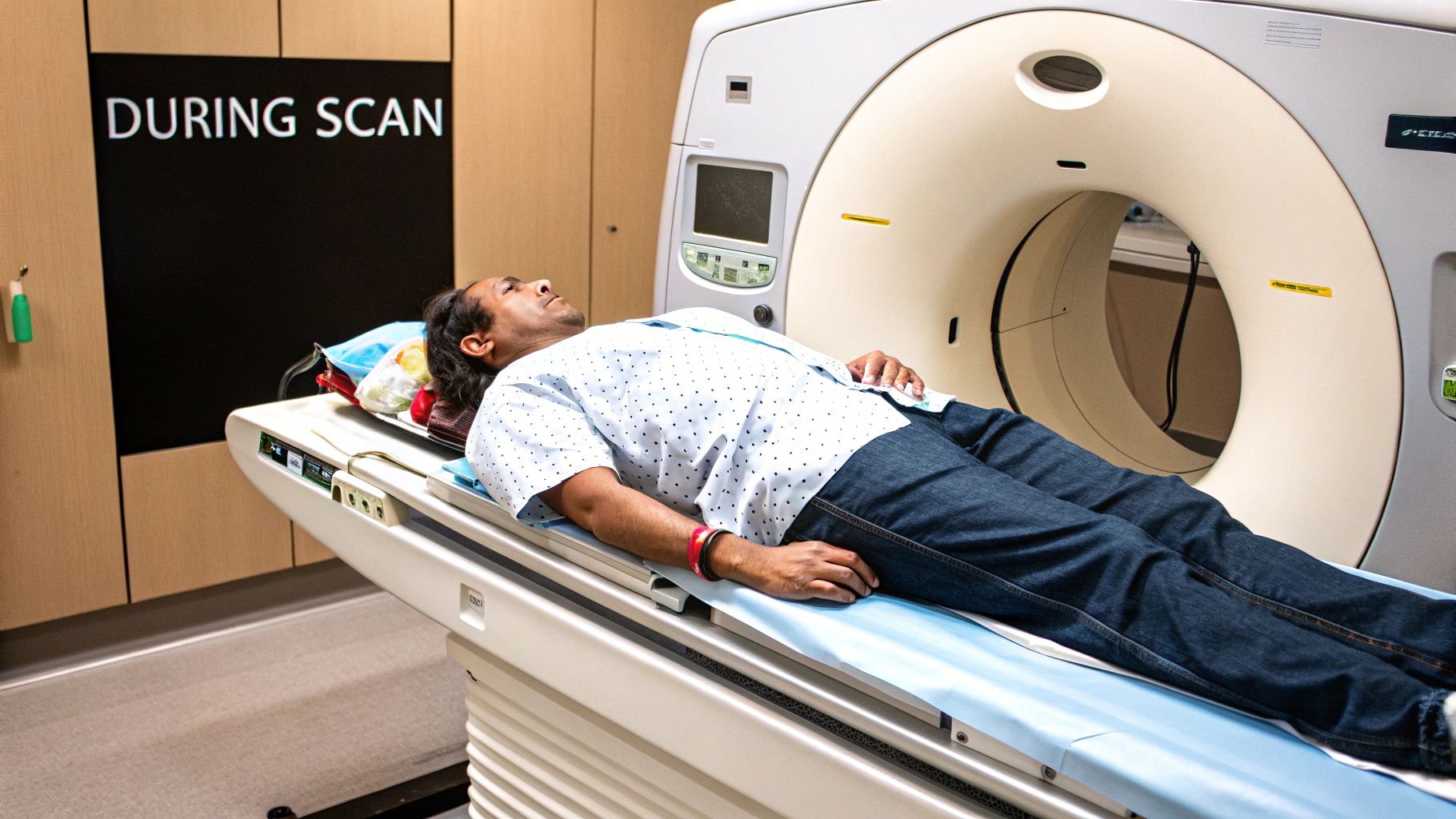
Navigating the path to a diagnosis for a child can be a complex journey for families and their medical team. Medical imaging provides a window into the body, offering detailed pictures that help healthcare providers understand your child’s symptoms. When a specific condition is suspected, a specialized approach to pediatric imaging is used to uncover the reasons. These methods are adapted for children’s unique needs, focusing on safety and accuracy to support the diagnostic process.
Foundational Pediatric Imaging Methods
X-rays and ultrasounds are frequently the first pediatric imaging techniques used in diagnostic investigations for children 12 and older. X-rays provide clear images of bones, making them useful when a fracture or sprain is suspected. Ultrasound uses safe sound waves to create images of soft tissues and organs. This offers a radiation-free method for examining areas such as the abdomen and pelvis for appendicitis or gallstones. These initial tests provide doctors with a broad overview and guide the next steps in the diagnostic journey.
Advanced Imaging Technologies
When more detailed information is needed, healthcare providers may turn to advanced imaging technologies.
Magnetic Resonance Imaging (MRI)
An MRI uses magnets and radio waves to generate highly detailed pictures of the brain, spine, and heart without using radiation. This technique is particularly helpful because it can detect small details that other imaging techniques might miss.
Computed Tomography (CT)
A CT scan uses a series of X-ray images to create cross-sectional views. It provides a different perspective on soft tissues like blood vessels, muscles, and organs.
Nuclear Medicine Imaging
These procedures involve administering a small, safe amount of a radioactive substance, which travels to a specific part of the body. A special camera then detects the substance to create images that show how an organ or tissue is functioning.
These advanced scans provide such high detail that they can be instrumental in pinpointing the underlying cause of a teen’s symptoms. Your medical team will recommend the best imaging technique for your child’s symptoms.
A Child-Centered Approach
Performing imaging on children requires a unique set of skills and a supportive environment from specially trained radiologists. Medical teams often use child-friendly techniques to help your teen feel more comfortable during a scan. This might include allowing a parent to be present in the room and explaining the procedure in an age-appropriate way to increase comprehension.
For some imaging studies, especially longer ones like an MRI, sedation may be suggested to help a child remain perfectly still. This stillness is necessary for clear, usable images. Pediatric healthcare teams are experienced in safely administering sedation to children. They will monitor your child closely throughout the procedure, putting your child’s well-being first.
Looking Forward
The journey through pediatric imaging is one part of the larger process of understanding your child’s health. Each scan builds upon the last, providing layers of information that help your child’s medical team understand their condition more completely. These technological tools, combined with the expertise of pediatric radiologists, offer a powerful way to clarify complex medical questions.